 Vietnam's cruise ports, measured from the gangway
Understand the ship
Cabin grades, without the sales language
Every ocean cruise sells the same ship at many prices. The difference is the cabin grade: where the cabin is, whether it has a window or a balcony, and what comes with it. This page explains the grades in plain terms, with notes on what matters on a voyage along the Vietnamese coast.
The four families of cabin
| Family | What you get | What you give up | Who it suits |
|---|---|---|---|
| Inside | A cabin with no window, often the same size as the next grade up | Daylight; you only know the time from a clock | People who sleep well in the dark and spend the day ashore or on deck |
| Ocean view | A window or porthole that does not open | Fresh air and a private outdoor space | People who want daylight and a sense of where the ship is |
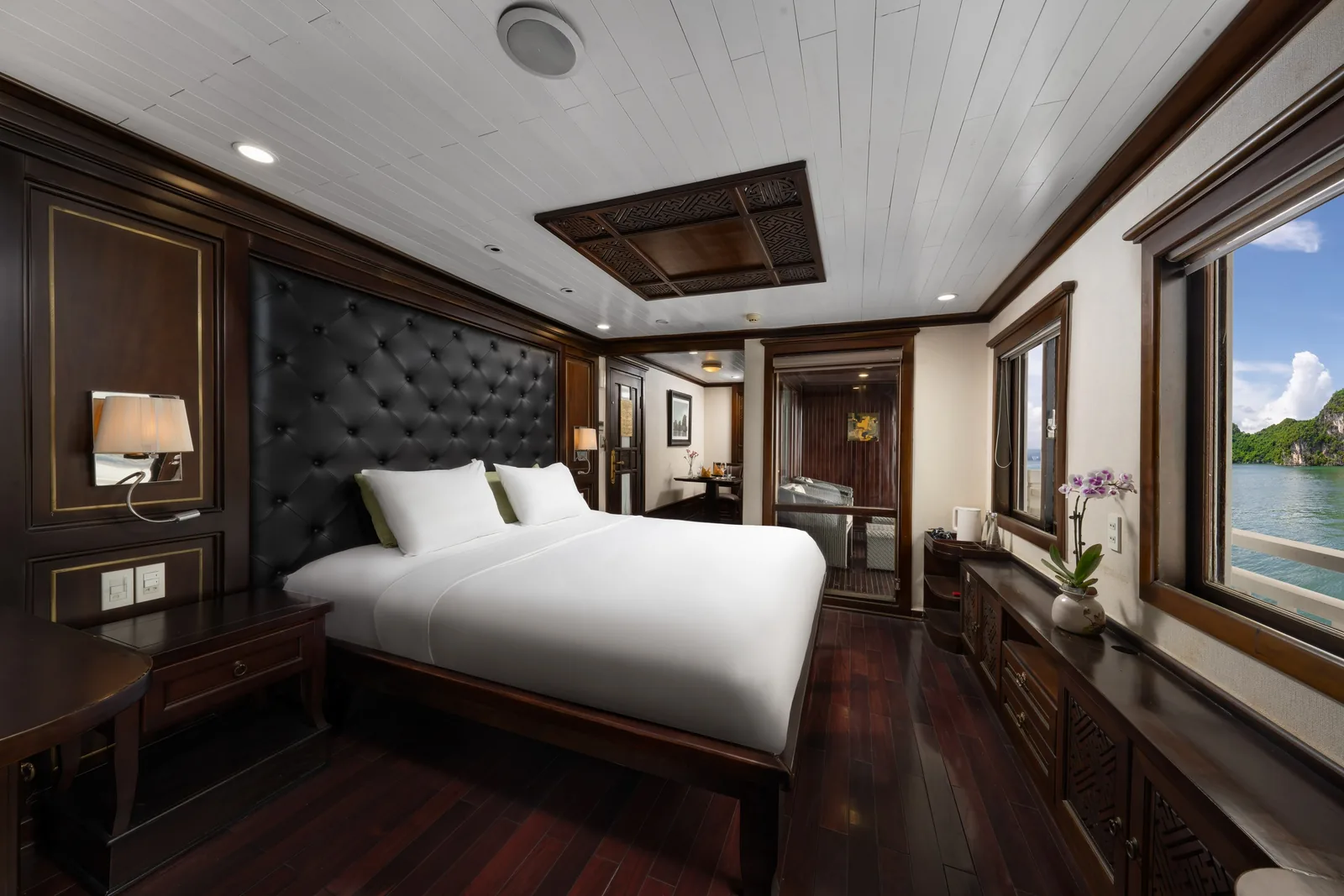
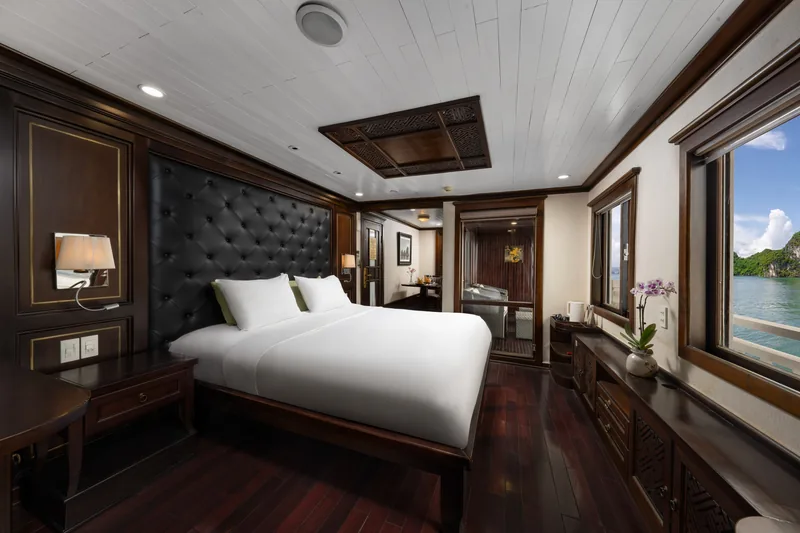
| Balcony | A door to a private outdoor space, usually with two chairs | Price; balconies vary a lot in size | Long sea days, scenic arrivals and people who like quiet outside |
| Suite | More space, often a separate sitting area, and extra services | Price, by a wide margin | Long voyages, people who value space and the extras listed for that grade |
Within each family, lines split cabins into many grades, often labelled with letters and numbers. The grade codes mostly describe location: deck height, how far forward or aft, and what is above and below. Two cabins with identical furniture can sit three grades apart.
What actually separates two grades in the same family
- Deck height. Higher decks usually cost more. They are closer to the pool decks and buffet, but they move more in a swell.
- Position along the ship. Cabins near the middle of the ship feel the least motion. Cabins at the front can feel the bow rise and fall; cabins at the back can feel engine and propeller vibration.
- View. "Obstructed" or "partial view" grades have a lifeboat, a structure or a railing in the way. They are cheaper for that reason and are marked as such on the booking.
- Size. Corner and end cabins can be larger; balconies at the back of some ships are much deeper than those along the side.
- Inclusions. Higher grades may come with priority boarding or tendering, a dedicated restaurant or lounge, or drinks. Read the list for the exact grade, not the family.
Guarantee cabins and upgrades
A guarantee booking buys a grade, or a minimum grade, without a specific cabin number. The line assigns the cabin later. The price is lower because you accept the risk of a less convenient location within that grade, or sometimes the chance of something better. If motion, noise or a connecting door would ruin the trip for you, a guarantee booking is the wrong tool.
Upgrade offers before sailing are common commercial practice; whether one is worth taking depends entirely on what the higher grade adds for your voyage. On a cruise with many port days in Vietnam, where you leave the ship early and return late, the cabin matters less than on a voyage with several sea days.
What matters on a Vietnamese coastal voyage
Three features of this coast affect the choice more than the brochure suggests.
- Many port days, early starts. Calls such as Phu My or Chan May mean long days off the ship. A balcony you barely use is an expensive way to store luggage.
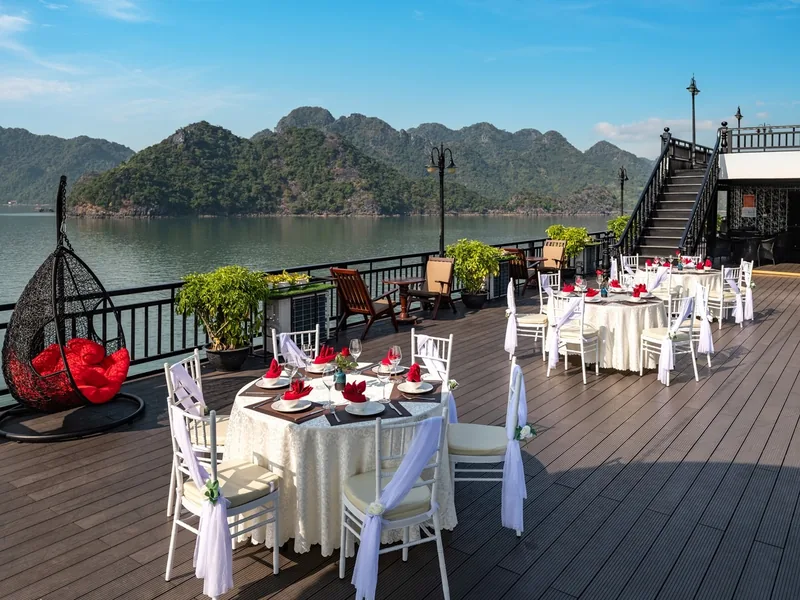
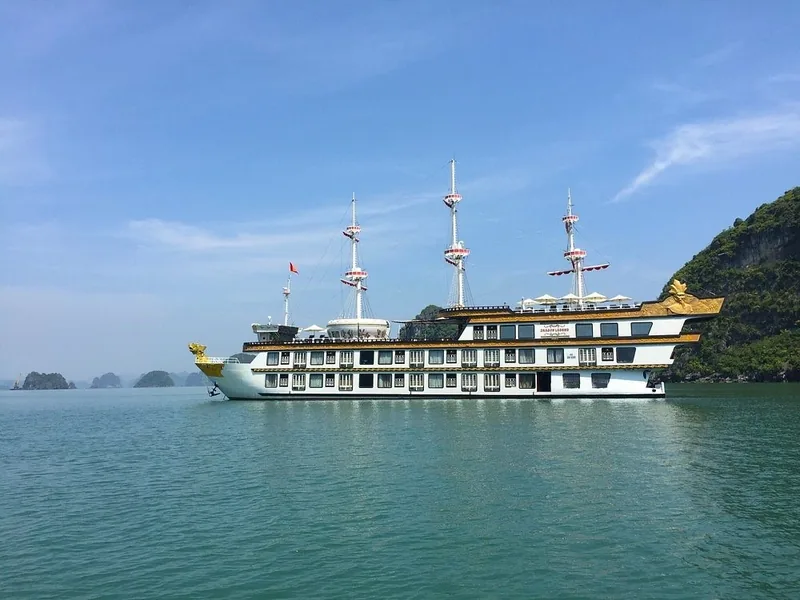
- Scenic arrivals. The approach into Ha Long Bay among the islands, and the coast around the Hai Van Pass, are the views people remember. Open decks at the front of the ship give a view to both sides; a balcony gives one side only, and which side faces the scenery depends on the route.
- Tender ports. At ports where the ship anchors, such as calls that tender at Phu Quoc, some higher grades come with priority tender tickets. If your voyage has several tender days, that can be worth more than the cabin itself.
Accessible cabins
Cabins adapted for wheelchair users have wider doors, a roll-in shower and more turning space. They are few on each ship and are often booked early. If you need one, also ask the line about tender ports: transferring a wheelchair to a tender in a swell may not be possible, which can make a whole port day unavailable regardless of the cabin. The port pages on this site say where we know a call usually tenders and where we could not confirm it.
Questions to ask before you choose
- What is directly above and below the cabin, on the deck plan?
- Is the view marked as obstructed or partial, and by what?
- Is the cabin near a lift, a stairwell, a crew door or a service area?
- What exactly does this grade include, in writing, compared with the grade below?
- Is this a guarantee booking or a named cabin?
- How many tender ports are on the voyage, and does any grade include priority tendering?
The deck plan page explains how to answer the first three from the plan itself.
Common questions
Questions readers ask
Is an inside cabin a bad idea?
Not necessarily. On a voyage with many long port days, an inside cabin can be a sensible way to spend less. People who find windowless rooms disorienting or who get seasick may prefer a window.
Where is the least motion on a ship?
Low and in the middle of the ship, close to the centre of rotation. High cabins at the front move the most.
What does obstructed view mean?
Something blocks part of the window or balcony view, often a lifeboat. The grade is cheaper because of it, and the booking should say so.
Do suite passengers get off first at tender ports?
On some lines, higher grades include priority tendering. It varies by line and grade, so check the inclusions list for your exact grade.
Related
Read next
Understand the ship
Deck plans
How to read a cruise deck plan: orientation, symbols, what is above and below a cabin, and tender platforms.

Understand the cruise
Missed ports
Why cruise calls in Vietnam are cancelled or shortened, how tendering works, and what your contract says.
Understand the cruise
Cruise season
When ocean cruise ships call in Vietnam, the itinerary patterns, and the storm months that change calls.

Understand the shore day
Shore time
How to turn hours in port into real time at a sight, with worked examples for every Vietnamese port.

Independent guide for cruise passengers
Home
Start here: port-by-port distances, shore-day maths, visas for cruise passengers and plain cabin explanations.
Start planning
Send a correction or a question
Tell us which page you mean, what you found instead and when. A link to the source, or the details of your own call, helps us check it.