 Vietnam's cruise ports, measured from the gangway
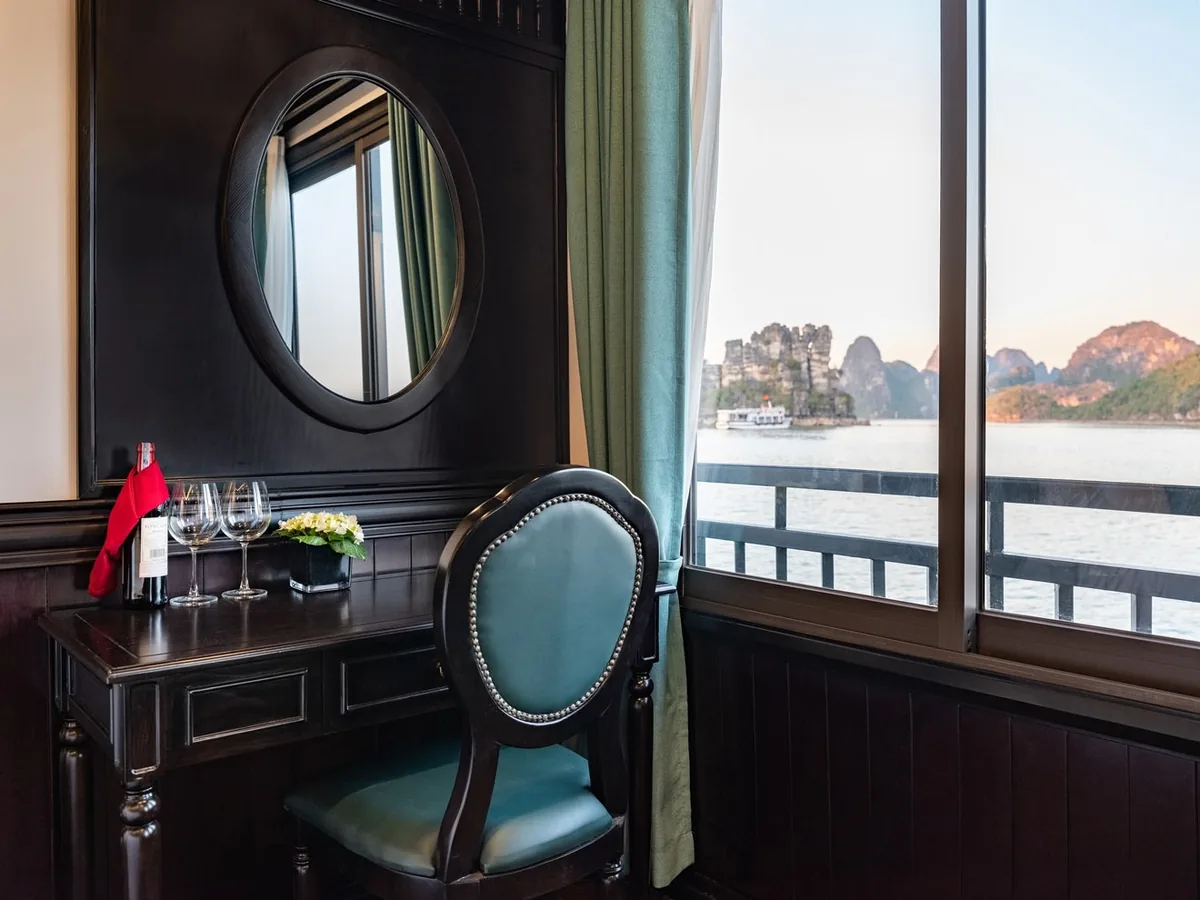
Understand the shore day
Visa and entry, for passengers arriving by ship
Cruise passengers enter Vietnam differently from air travellers. Depending on your passport and your ship, you go ashore visa-free, on your own e-visa, or on a visa your cruise line's Vietnamese agent arranges and the port police issue on board. This page sets out each route and the 2026 decree behind it.
The three routes in brief
| Route | Who it suits | What you do | Main catch |
|---|---|---|---|
| Visa exemption | Passport holders from the exemption lists, for example the UK and much of western Europe | Nothing in advance beyond a valid passport | Only nationalities on the lists; up to 45 days for most of them |
| Your own e-visa | Anyone, applied for at the official portal | Apply online, name your entry and exit gates | The gates you name are binding; not every cruise port appears by name |
| Ship-arranged visa | Passengers whose line handles Vietnamese entry for them | Complete the form the line or its Vietnamese agent sends | Fees and deadlines are set by the line |
Which route you use is decided by your passport first and your cruise line second. Many lines tell passengers exactly which they want; if yours does, follow it, even if another route looks simpler on paper.
Sources: UK Foreign Office — Vietnam entry requirements; Vietjet Air — countries eligible for the 45-day visa exemption (updated 5 February 2026); Government of Vietnam news portal — Resolution 389/NQ-CP adds e-visa ports; Decree 289/2026/ND-CP on security and order at port border gates — LuatVietnam English text · last checked .
What the 2026 port security decree says about cruise ships
Decree 289/2026/ND-CP on security and order at port border gates was issued on 21 July 2026 and took effect on 1 October 2026. For international tourist ships, it requires the travel company receiving the passengers to submit, at least 12 hours before arrival, the original tour programme, a copy of its international travel business licence for a first reception, and the Immigration Department's original letter approving the visas, unless the passengers are visa-exempt. If time is short, a faxed copy may be accepted, with the original due within three days.
The port border gate police then grant visas to eligible passengers on board, under the entry and exit law. Foreign passengers show a valid passport or recognised travel document when they go ashore. The decree also forbids passengers from leaving the ship during entry or arrival procedures, and during and after exit procedures, and bars transit ships from letting anyone board or leave without permission.
Two practical points follow. First, the visa arrangement for a ship-arranged route is made by a Vietnamese travel company before you arrive, so your line's deadline for sending passport details is real. Second, the people who stamp your papers at a Vietnamese cruise port are the port border police of the Ministry of Public Security.
Our summary follows an English translation published by a legal database and a news report of the decree. One clause of the translation appears to exclude entry and exit from the decree's scope while other clauses regulate them; the Vietnamese text is the authority.
Sources: Decree 289/2026/ND-CP on security and order at port border gates — LuatVietnam English text; The Star — report on the new port security decree (24 July 2026) · last checked .
Visa exemption: check your passport first
Vietnam grants visa-free stays of up to 45 days to citizens of a growing list of countries. Resolution 44/NQ-CP covers Denmark, Finland, France, Germany, Italy, Japan, Norway, Russia, South Korea, Spain, Sweden and the United Kingdom, and runs from 15 March 2025 to 14 March 2028. Resolution 229/NQ-CP, valid from 15 August 2025 to 14 August 2028, adds Belgium, Bulgaria, Croatia, the Czech Republic, Hungary, Luxembourg, the Netherlands, Poland, Romania, Slovakia, Slovenia and Switzerland for tourism. Several ASEAN countries have bilateral exemptions of 14 to 30 days.
The UK Foreign Office confirms the 45 days for British nationals and adds that the passport must be valid for at least six months after arrival, with at least two blank pages, that damaged passports can be refused, and that you must enter and leave on the same passport.
The lists are set by government resolutions and change. Treat the version above as the state on our check date and confirm with your line or the Immigration Department before you sail. Visa-free stays cannot normally be extended, according to a travel agency summary.
Sources: Vietjet Air — countries eligible for the 45-day visa exemption (updated 5 February 2026); Frontier Travel Vietnam — visa-free countries 2026 (travel agency); UK Foreign Office — Vietnam entry requirements; Embassy of Vietnam in Saudi Arabia — visa exemption · last checked .
The e-visa and the ports it names
Vietnam issues e-visas to citizens of every country and territory, for stays of up to 90 days with single or multiple entries. The UK Foreign Office warns that the entry and exit points you select on the application are restrictive. In December 2025, Resolution 389/NQ-CP added 41 border gates to the e-visa list, 26 of them seaports, bringing the total to 83.
| Cruise area | Seaport gate on the e-visa list | Note |
|---|---|---|
| Ha Long | Hon Gai (Quang Ninh) | The cruise port is in Bai Chay; Cai Lan is not listed by name |
| Hue | Chan May | Listed before December 2025 |
| Da Nang | Da Nang port | Listed before December 2025 |
| Nha Trang | Nha Trang | Cam Ranh appears only as an airport gate |
| Ho Chi Minh City | Ho Chi Minh City; Vung Tau | Phu My is not listed by name |
| Phu Quoc | Duong Dong; An Thoi | An Thoi added in December 2025 |
If you are applying for your own e-visa for a cruise, the entry gate is the first Vietnamese port of the cruise and the exit gate the last. Where your port does not appear by name, ask your cruise line which gate name to enter rather than guessing.
Sources: Vietnam National Authority of Tourism — 41 new e-visa border gates; Government of Vietnam news portal — Resolution 389/NQ-CP adds e-visa ports; UK Foreign Office — Vietnam entry requirements · last checked .
The ship-arranged visa, as the tourism authority describes it
An undated page from Vietnam's tourism authority describes the procedure many cruise passengers meet. Passengers get and complete the visa form through the Vietnamese tour operators that serve cruise ships. When the ship docks, passengers show their passports to the port border unit, which checks them and issues a separate entry visa. Passengers keep the passport and that visa with them ashore. On exit, the border unit stamps the separate visa "invalid". On ships calling at several Vietnamese ports, entry is at the first and exit at the last.
The same page gives a visa fee for arrival by sea of USD 5 per person. A visa agency's page gives an application fee of USD 25 to 80 depending on the cruise operator, plus USD 5 for a landing slip. Because the official page is undated, treat both figures as indicative; your line will state what it charges.
Behind this sits Article 26 of the 2014 Law on Entry, Exit, Transit and Residence of Foreigners, which provides for foreigners in transit by sea who wish to enter Vietnam for tourism on a programme organised by an international travel company, and Circular 44/2011/TT-BCA on tour permits for foreigners in transit, which is recorded as still in force.
Sources: Vietnam National Authority of Tourism — visa procedure for cruise passengers (undated page); iVisaTravel — Vietnam visa for cruise passengers (visa agency); Thu Vien Phap Luat — Article 26 of the 2014 Law on Entry, Exit, Transit and Residence of Foreigners; Luat Minh Khue — transit rules for foreigners in Vietnam (law firm explainer); Circular 44/2011/TT-BCA on tour permits for foreigners in transit — caselaw.vn record · last checked .
Money and customs at the gangway
The cash declaration rule applies to cruise passengers as to anyone else: cash above 15 million dong, or above USD 5,000 or its equivalent in other currencies, must be declared. Several ports have no ATM inside the gate, Chan May and Phu My among them, so carry a modest amount of dong for the day.
Sources: UK Foreign Office — Vietnam entry requirements; Vietnam Drive — Chan May cruise port (transfer company page); Cruise Critic — Ho Chi Minh City cruise port guide (cruise review site) · last checked .
Common questions
Questions readers ask
Do British passengers need a visa to go ashore in Vietnam?
British nationals can visit without a visa for up to 45 days, according to the UK Foreign Office. Your passport must be valid for six months after arrival and have two blank pages.
Can I use my own e-visa on a cruise?
Yes, if your cruise line accepts it. Name the first Vietnamese port of the cruise as the entry gate and the last as the exit gate, and ask the line which gate name to use where your port is not listed by name.
Who issues the visa when the ship arrives?
The port border gate police, who grant visas to eligible passengers on board under the 2026 port security decree, after the receiving travel company has filed the paperwork at least 12 hours before arrival.
Do I keep my passport when I go ashore?
According to the tourism authority's description, yes: passengers keep the passport and the separate visa with them while sightseeing. Some lines handle passports differently on board, so follow the line's instructions.
Related
Read next

Understand the shore day
Shore time
How to turn hours in port into real time at a sight, with worked examples for every Vietnamese port.
Ports
Ports
All six Vietnamese cruise ports in one table: road distances, planning times and what fits in a call.
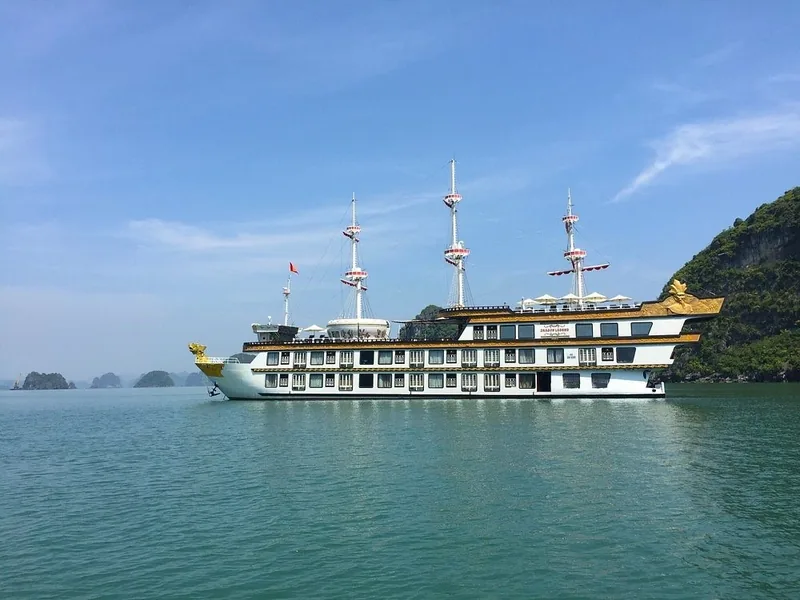
Understand the cruise
Cruise season
When ocean cruise ships call in Vietnam, the itinerary patterns, and the storm months that change calls.
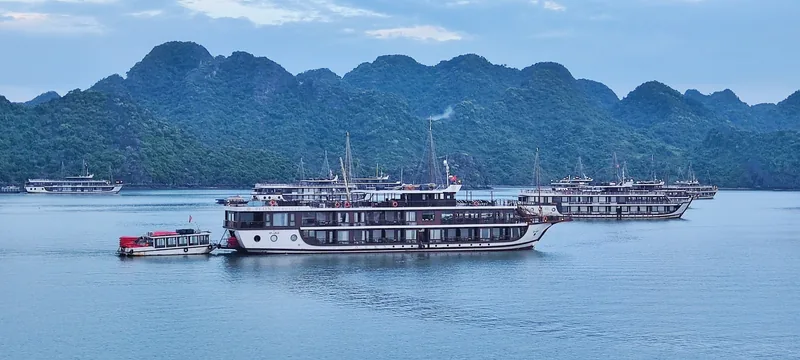
Understand the cruise
Missed ports
Why cruise calls in Vietnam are cancelled or shortened, how tendering works, and what your contract says.
Ports · Quang Ninh
Ha Long (Cai Lan)
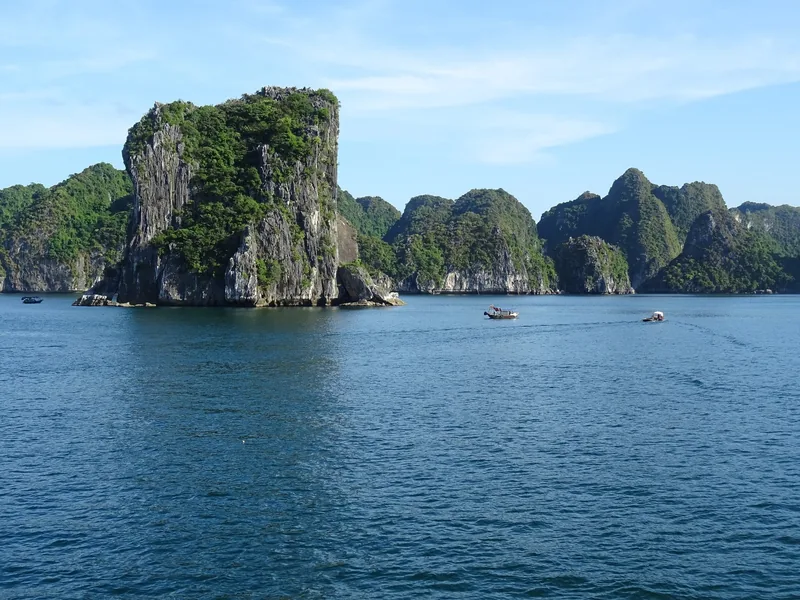
Ha Long cruise port: berth facts, road distances, bay boats from the terminal and the Hanoi arithmetic.
This guide
About
Editorial policy: who writes the guide, how distances and rules are checked, advertising and corrections.
Start planning
Send a correction or a question
Tell us which page you mean, what you found instead and when. A link to the source, or the details of your own call, helps us check it.