 Vietnam's cruise ports, measured from the gangway

Understand the shore day
Shore time maths, and the all-aboard rule
A port call of ten hours is not ten hours ashore. This page shows how to subtract the gangway, the gate, the road and the margin, port by port, so the plan you pick on board is one you can finish.
The sum, in five lines
- Start with the window. Arrival time to departure time, from the ship's own schedule.
- Subtract getting off. Gangway or tender, then the terminal and the port gate. We use 45 minutes for a berth; add more at the first Vietnamese port of a cruise, where entry formalities are done, and more again at a tender port.
- Subtract the margin. Be back an hour before departure. The all-aboard time in the daily programme is earlier than departure, and the road back is where delays happen.
- Subtract the road, twice. Use the planning time each way from the port pages, not the free-flow time.
- What is left is your time at the sight. If it is under two hours, choose something closer.
Chan May to Hue on a call from 08:00 to 17:00. Window 9 h. Minus 45 min to get out, minus 1 h margin: 7 h 15. Minus the road, 1 h 20 to 1 h 45 each way: 3 h 45 to 4 h 35 in Hue.
Why the all-aboard time is the real deadline
Cruise ships publish a departure time and, in the daily programme, an all-aboard time before it. The all-aboard time is when passengers must be back on board so the ship can close its doors, complete its formalities and leave. In Vietnam those formalities are real: the port border police run exit procedures at the last Vietnamese port of the cruise, and the port security decree that took effect on 1 October 2026 forbids anyone from leaving or boarding a ship during and after exit procedures without permission.
Ship excursions and independent plans are treated differently. On a ship's own coach, the escort sets the pick-up time and the ship knows where the group is. On your own, nobody is counting. One cruise line's published self-guided transfer from Phu My to Ho Chi Minh City makes this explicit: the escort gives the return pick-up time and passengers must be at the pick-up point on time.
Missing the ship is expensive. The ticket contract of one large cruise line, which we read for this page, says a guest who fails to board is not entitled to a refund or compensation of any kind and may board later only with the line's consent. Read your own line's contract; the wording differs, but the cost of catching up falls on someone.
Sources: Decree 289/2026/ND-CP on security and order at port border gates — LuatVietnam English text; Vietnam National Authority of Tourism — visa procedure for cruise passengers (undated page); Holland America Line — Phu My, Ho Chi Minh City on your own (cruise line page); Carnival Cruise Line — cruise ticket contract (cruise line contract) · last checked .
The numbers we use, and why
These are planning figures, not rules from any authority. The road distances behind them were calculated on 26 October 2026 from OpenStreetMap data with the OSRM routing engine, port berth to sight. Where cruise lines, port guides or transfer listings publish their own times, we compared them; at Phu My, for example, one cruise line allows about 90 minutes each way to the city and a cruise review site about 2.5 hours.
The VNAT description of the cruise entry procedure explains why the first port takes longer: on ships calling at several Vietnamese ports, entry formalities happen at the first port and exit formalities at the last, with a simpler check at the ports between.
Sources: OpenStreetMap road data routed with the OSRM engine (our calculation, free-flow times); Holland America Line — Phu My, Ho Chi Minh City on your own (cruise line page); Cruise Critic — Ho Chi Minh City cruise port guide (cruise review site); Vietnam National Authority of Tourism — visa procedure for cruise passengers (undated page) · last checked .
Port by port: the longest plan that still works
| Port | Longest plan that usually fits a 9-hour call | The plan that usually does not |
|---|---|---|
| Ha Long | Bay boat from the terminal wharf; or Yen Tu | Hanoi |
| Chan May | Hue citadel and one tomb; or Hoi An alone | Hue and Hoi An together |
| Tien Sa | Hoi An and Da Nang; or My Son and Hoi An on a long call | Hue, unless the call is long |
| Nha Trang city port | The city sights and an island trip | Little; the sights are close |
| Cam Ranh | Nha Trang city | The city and an island trip |
| Phu My | Central Ho Chi Minh City on a long call; or Vung Tau | Cu Chi and the city together |
| Phu Quoc | The south of the island by tender | South and north on the same call |
Each verdict comes from the same sum. The port pages show the full distance tables, so you can redo it with your own ship's times.
Sources: OpenStreetMap road data routed with the OSRM engine (our calculation, free-flow times) · last checked .
Things that eat the margin
- A late arrival. The departure time rarely moves to compensate. Cut the road, not the margin.
- Rain. Heavy rain slows coaches on mountain roads such as the Hai Van Pass and on the expressways into Ho Chi Minh City; in central Vietnam in October and November, flooding can block roads.
- Public holidays. Around the Lunar New Year, traffic into and out of cities is heavier. One cruise line already flags its 7 February 2027 call at Phu My as falling in the Tet holiday period.
- Queues. Cable cars, ticket booths and the tender pier all have queues that grow when several ships are in.
- Your group. Every stop takes longer with forty people than with two.
Sources: UK Foreign Office — Vietnam safety and security; Holland America Line — Phu My, Ho Chi Minh City on your own (cruise line page) · last checked .
If you are running late
Call the ship. The port agent's and the ship's contact numbers are usually printed in the daily programme or on the shore card; keep them with your passport and the visa document the ship issued. Do not try to make up time by asking a driver to speed: the UK Foreign Office notes that road law compliance is poor in Vietnam and that coach crashes are not uncommon.
If you do miss the ship, you are ashore in Vietnam on a visa or permission tied to that ship's call. Contact the ship's local agent and the port border police before you try to travel on, and expect to pay for getting to the next port yourself.
Sources: UK Foreign Office — Vietnam safety and security; Decree 289/2026/ND-CP on security and order at port border gates — LuatVietnam English text · last checked .
Common questions
Questions readers ask
How early should I be back at the ship?
We plan on being back one hour before departure. The all-aboard time in the daily programme is the real deadline, and it is earlier than departure.
Is a ship's excursion safer for timing than going on my own?
For timing, yes: the escort sets the pick-up time and the ship knows where the group is. On your own, you carry the risk of being late.
Why does the first Vietnamese port take longer to get off?
Entry formalities for the whole cruise are done at the first Vietnamese port, with exit formalities at the last, according to the tourism authority's description of the cruise procedure.
What is the minimum time worth spending at a sight?
We use two hours as a working minimum. Below that, a closer plan usually gives you more.
Related
Read next

Ports
Ports
All six Vietnamese cruise ports in one table: road distances, planning times and what fits in a call.

Understand the cruise
Missed ports
Why cruise calls in Vietnam are cancelled or shortened, how tendering works, and what your contract says.
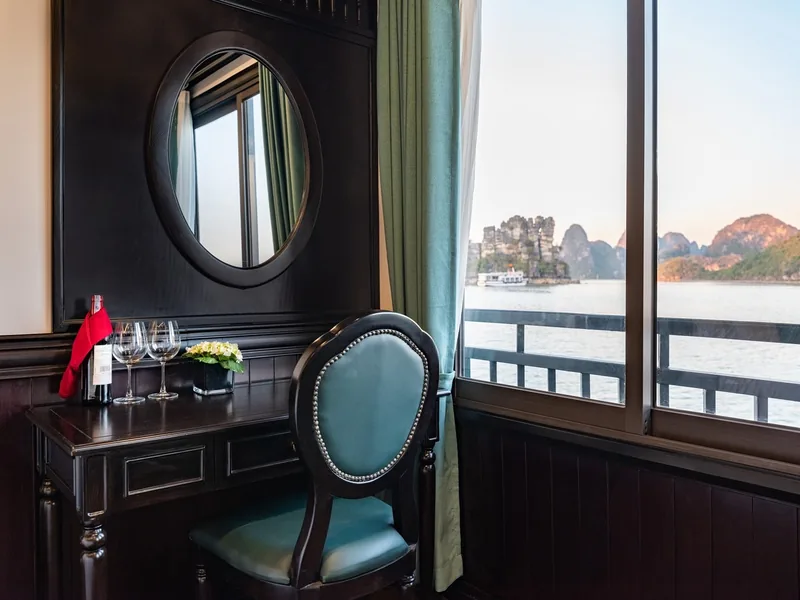
Understand the shore day
Visa and entry
Visa-free entry, the e-visa and the ship-arranged visa for cruise passengers, with the 2026 decree explained.
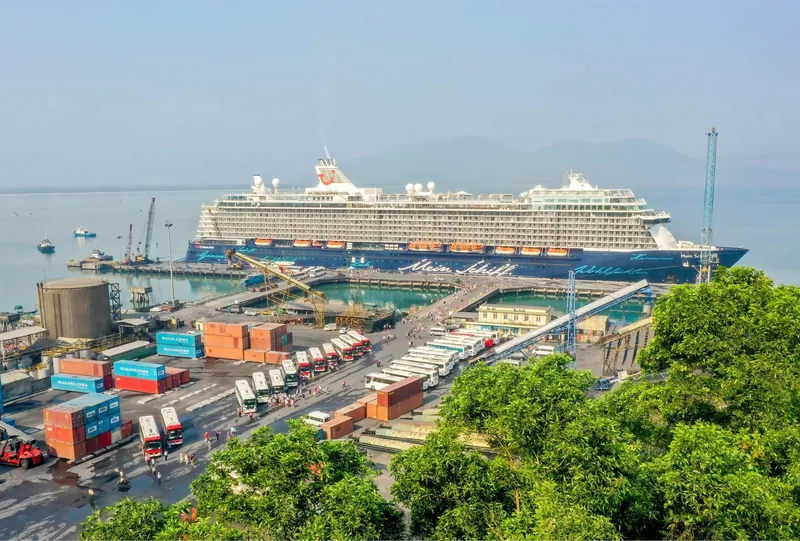
Ports · Hue
Chan May
Chan May port: berth facts, distances to Hue, Da Nang and Hoi An, the Hai Van Pass and the one-direction rule.
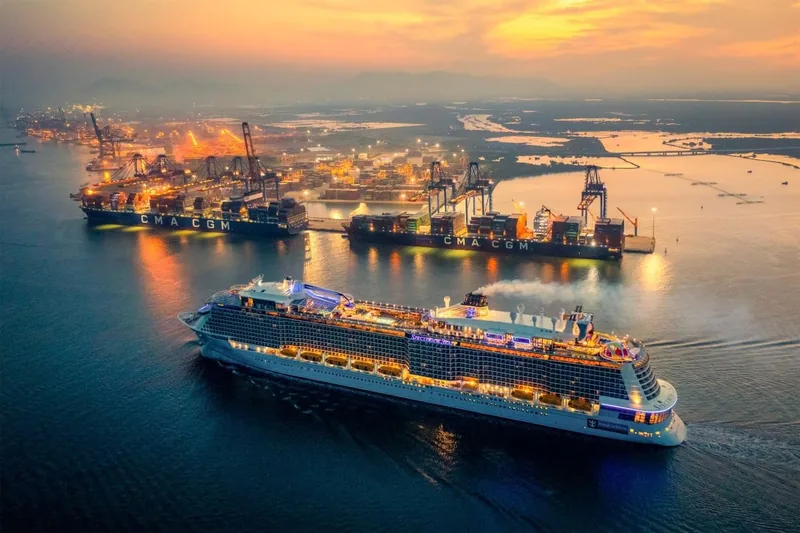
Ports · Ho Chi Minh City
Phu My
Phu My port: no facilities at the berth, the road to Ho Chi Minh City, Vung Tau and Cu Chi, and what fits.
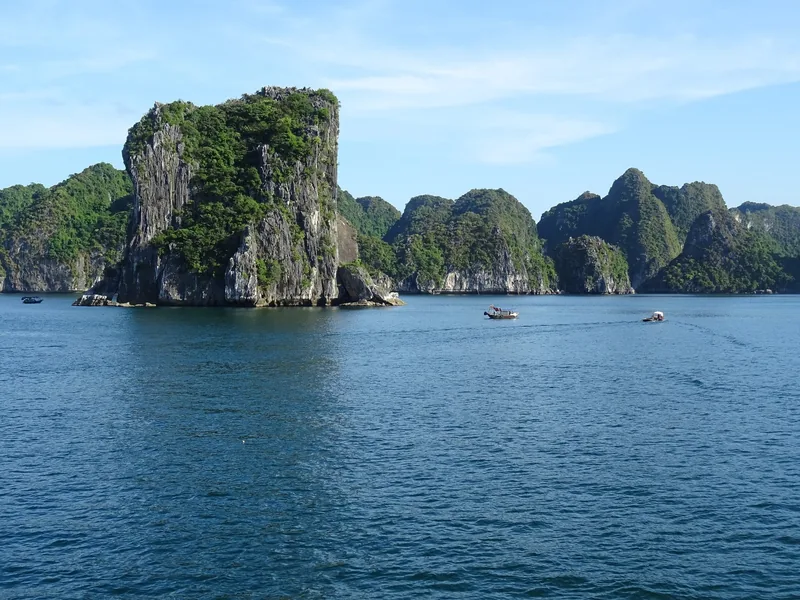
Ports · Quang Ninh
Ha Long (Cai Lan)
Ha Long cruise port: berth facts, road distances, bay boats from the terminal and the Hanoi arithmetic.
Start planning
Send a correction or a question
Tell us which page you mean, what you found instead and when. A link to the source, or the details of your own call, helps us check it.